
Do I need a permit to build a fence in Los Angeles?
The short answer: it depends on where the fence goes and how tall it is. In Los Angeles, fences under six feet in rear and side yards typically don't require a permit. Front yard fences hit the threshold at three and a half feet. Go higher than either of those, and you're filing with LADBS.
There's a longer answer too. If your property is in an Historic Preservation Overlay Zone (HPOZ) — think Hancock Park, Carthay Circle, or parts of Los Feliz — you'll need City Planning sign-off before LADBS will even look at your permit application. Properties north of Sunset in Bel Air, Brentwood, and Pacific Palisades often carry recorded CC&Rs that cap fence heights independently of city code.
"A fence built without permits doesn't just risk a fine — it can complicate your title report when you sell."
If your property is in a Fence Height District (LAMC 13.10) — areas where the City has recognized elevated burglary risk — you may actually be permitted to install a taller wrought iron fence in your front yard than neighboring properties. Setback files these applications weekly and knows which districts qualify.
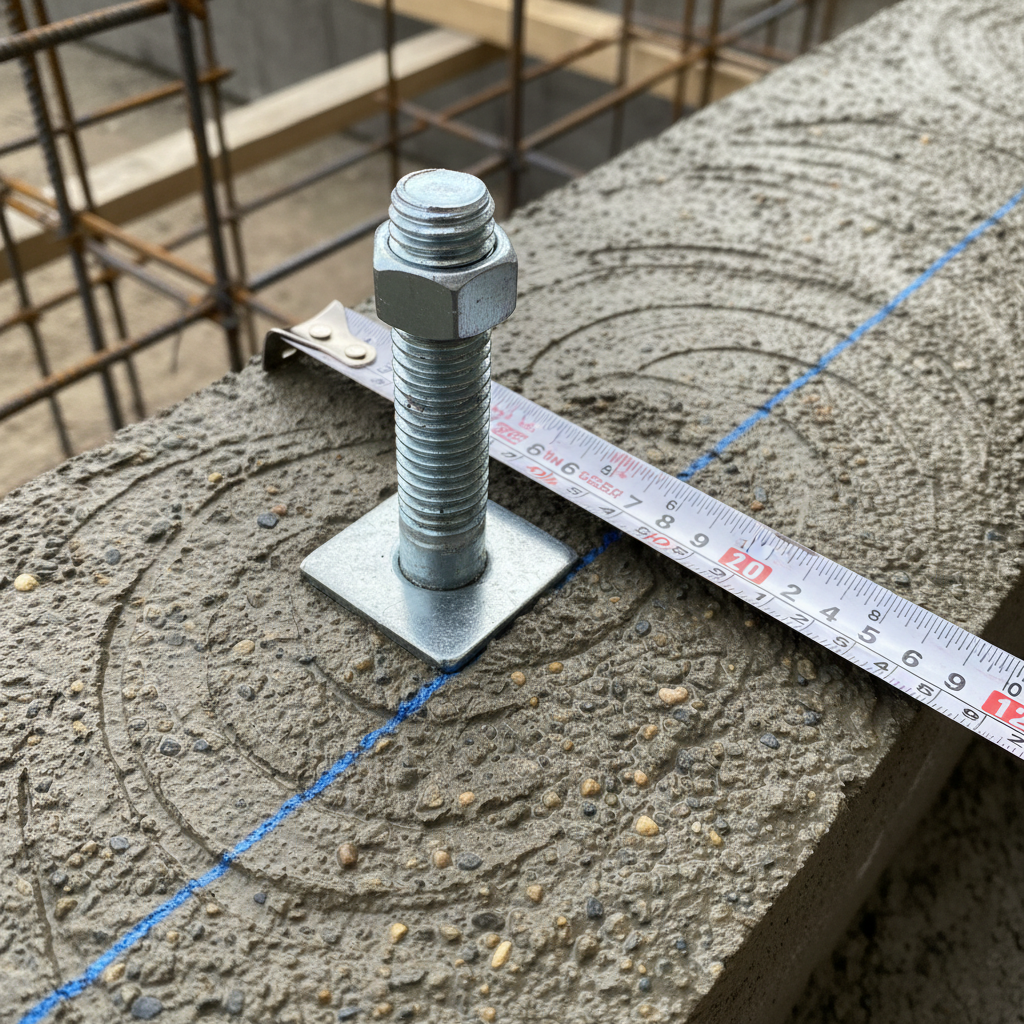
Post anchor set in concrete · permit documentation on file
What Setback Handles
What's the difference between wrought iron and tubular steel — and which one actually belongs on my property?
Here's a truth the fence industry won't advertise: most of what gets called "wrought iron" in Los Angeles is tubular steel. True wrought iron is hand-forged and costs significantly more. For most residential applications, powder-coated tubular steel is the right call — stronger, lighter, and far easier to maintain in LA's coastal air.
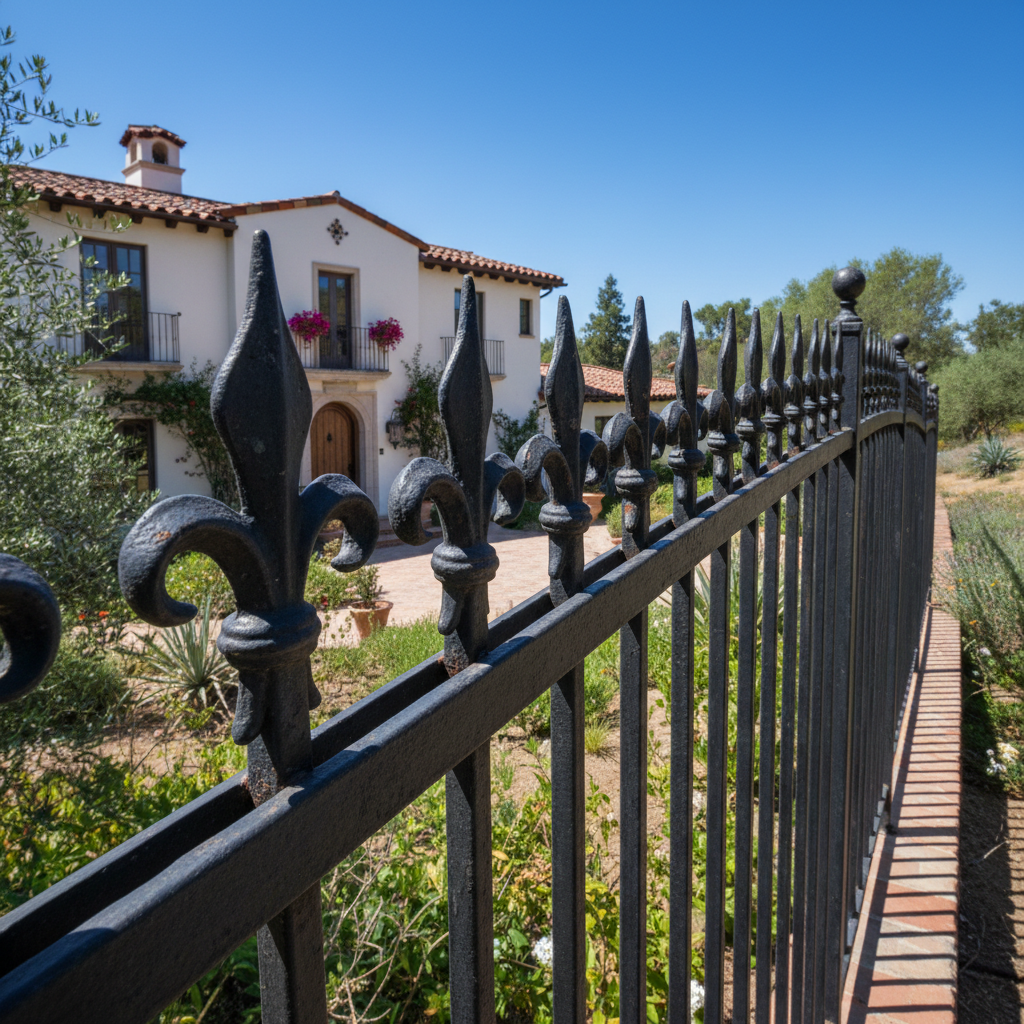
Wrought Iron
Heritage AestheticLos Feliz · Hancock Park · Larchmont
True wrought iron is hand-forged and increasingly rare. Most "wrought iron" fences installed today are tubular steel or solid steel stock — visually identical, structurally superior.
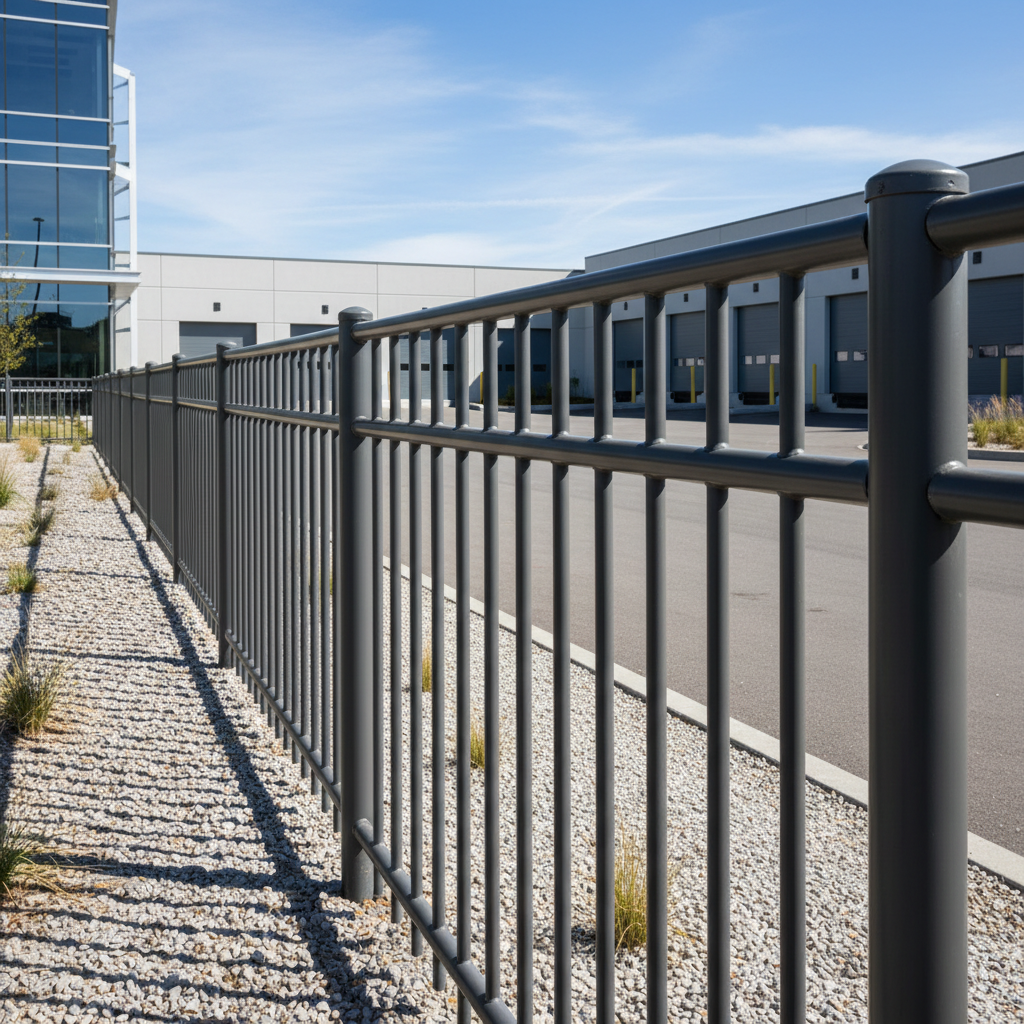
Tubular Steel
Best ValueVernon · Commerce · Culver City
Factory-made hollow steel sections welded into panels. Powder coating provides rust resistance well-suited to LA's coastal and valley microclimates. The workhorse of commercial perimeter fencing.
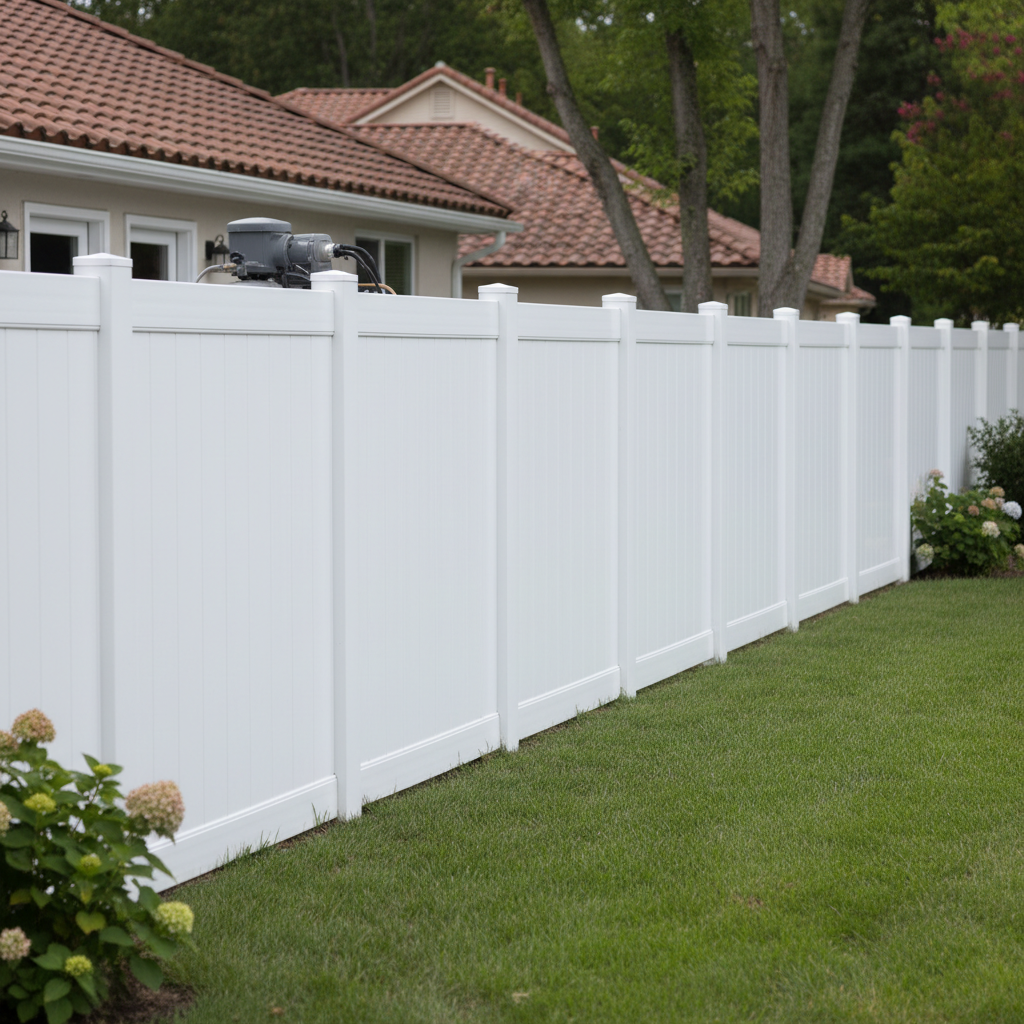
Vinyl Privacy
Zero MaintenanceEncino · Woodland Hills · Chatsworth
No painting, no rust, no rot. Ideal for pool equipment enclosures, side-yard privacy runs, and HOA-controlled neighborhoods that specify white or tan panels.
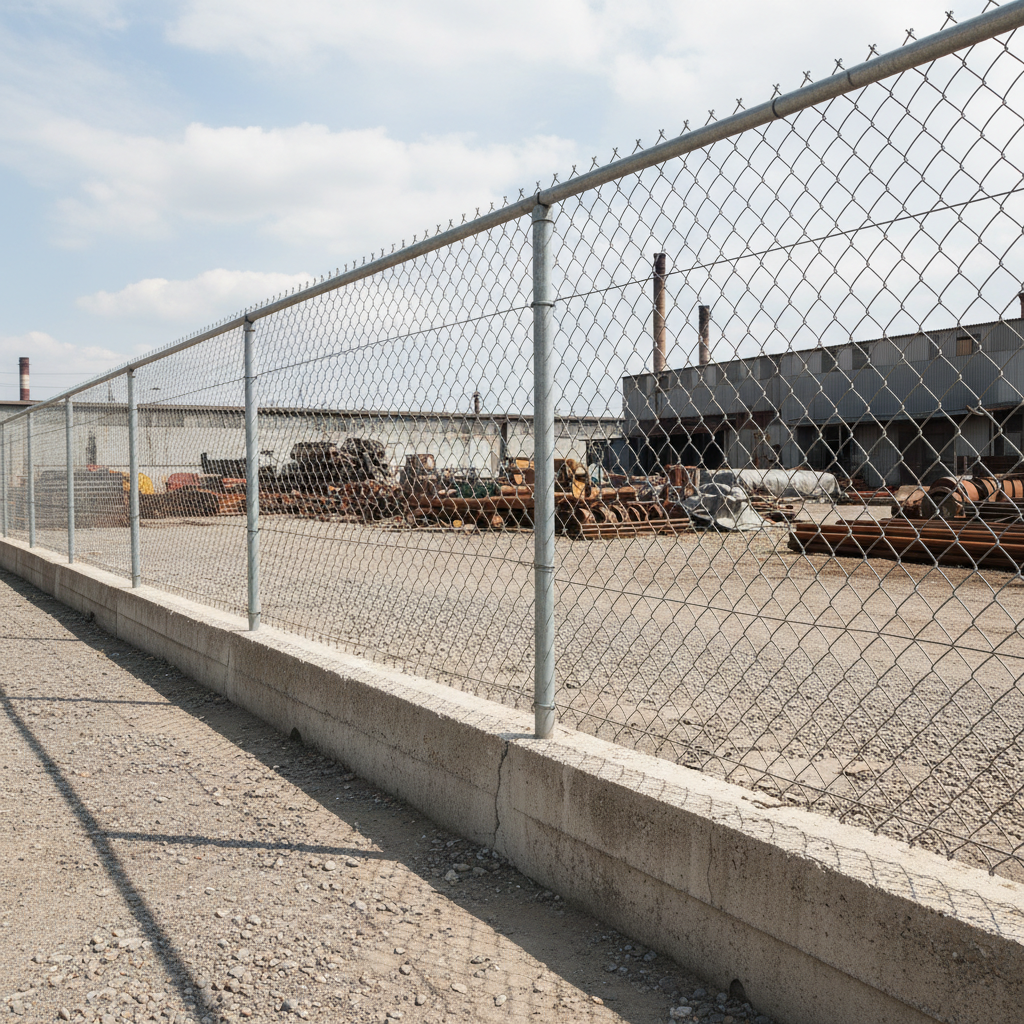
Chain Link
Most InstalledVernon · Boyle Heights · Sun Valley
The most economical perimeter solution for large commercial runs. Galvanized or vinyl-coated options available. Setback installs more linear feet of chain link than any other material.
"LA's Mediterranean climate is unusually forgiving — low humidity means iron and steel last longer here than almost anywhere else in the country. The question isn't durability; it's aesthetics and budget."
— Setback Field Notes, 2024
Can my neighbor be required to pay for half the fence?
Yes — under California Civil Code Section 841, the Good Neighbor Fence Law, both property owners share equally in the cost of a division fence that sits on the boundary line between two lots and benefits both parties. This isn't a suggestion; it's state law.
There are conditions. The fence must actually sit on the boundary (not entirely within your property), and you must send your neighbor 30 days written notice before construction begins. The notice needs to describe the problem with the existing fence, reference the shared-cost presumption, and include a reasonable cost estimate.
"If they refuse, you build it anyway and take them to small claims court. Judges in LA County know this statute and regularly order neighbors to pay."
The law does not apply if the fence sits entirely within your property — in that case, it's yours to pay for. And HOA fences are governed separately; your CC&Rs may override the Good Neighbor presumption entirely.
Your 30-Day Notice Must Include
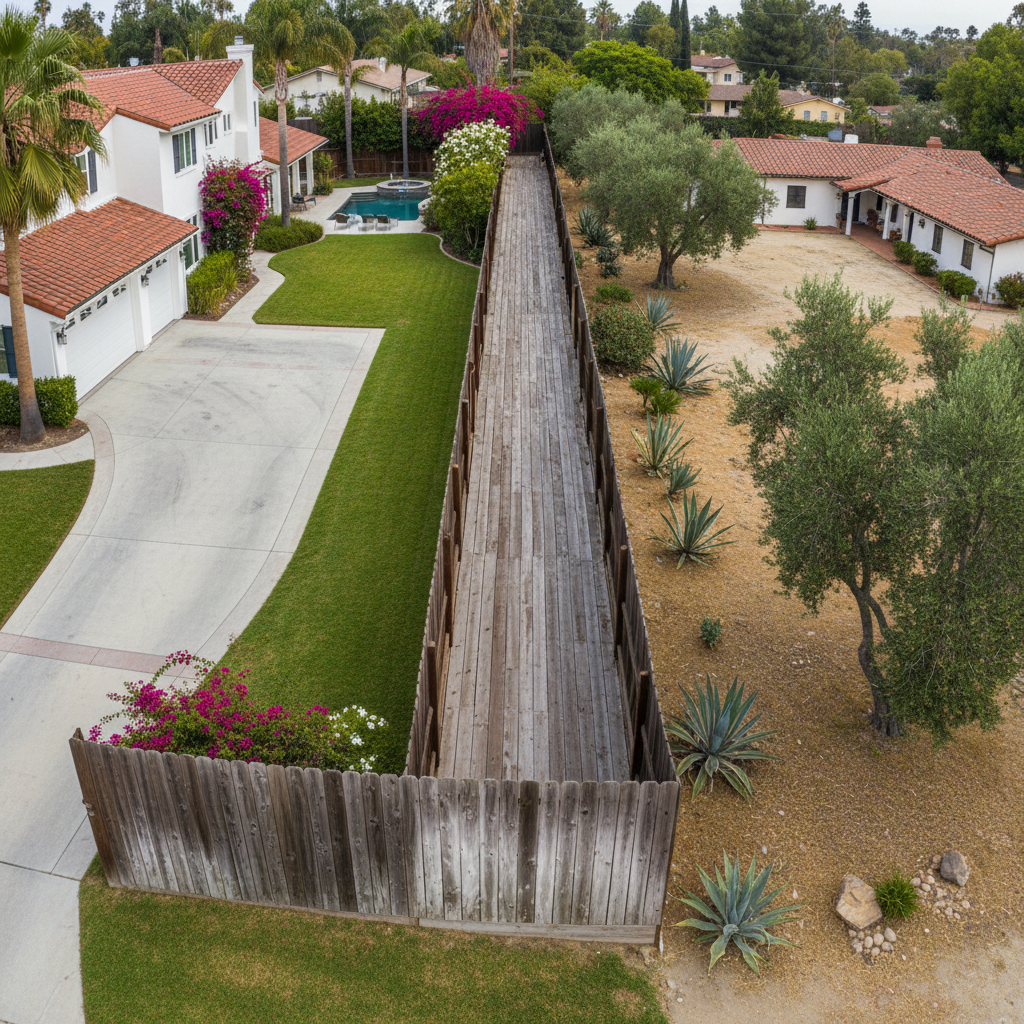
Property line boundary · Los Feliz, CA
Setback Can Help
We prepare Good Neighbor notices for clients as part of our site walk process — including cost breakdowns formatted for small claims use if your neighbor doesn't cooperate.
My pool fence is old — is it actually up to code, and what happens if it isn't?
Pool fencing in Los Angeles is governed by California Building Code Section 3109 and enforced locally by LADBS. The rules are specific and non-negotiable — and most fences installed before 2010 don't meet current standards. The liability exposure for a non-compliant pool fence is real, and insurance carriers are increasingly asking for proof of compliance at renewal.
The most common violations we find on site walks: horizontal rails facing outward (climbable from outside), gates that don't self-latch, and vertical picket spacing over four inches. Any one of these is a code failure. All three are common on ornamental aluminum fences installed by general contractors who weren't specialists.
LA Pool Fence Code Requirements
| Code / Section | Requirement |
|---|---|
| §3109.4.1 | Minimum 60-inch (5 ft) barrier height around all pools |
| LAMC 91.3109 | Horizontal members must face pool side if spacing is under 45 inches |
| Vertical Spacing | Vertical members cannot exceed 4 inches apart — no child-size gaps |
| Gate Code | All gates must open away from pool, self-close, and self-latch |
| Latch Height | Self-latching hardware must be located 54 inches above grade or on pool side |
"We've replaced pool fences the week before a property closes escrow. It's a known inspection trigger — don't wait to find out at the worst possible time."
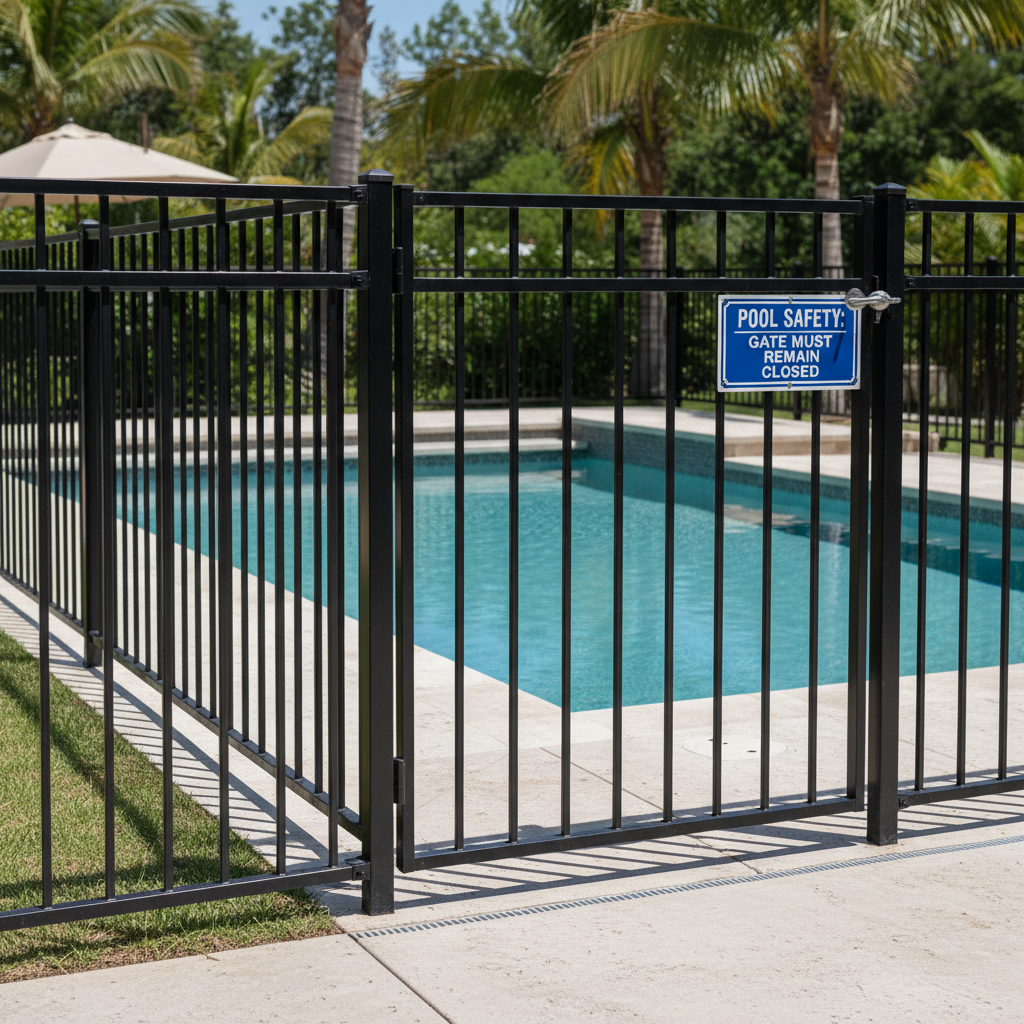
Pool code compliant gate · Encino, CA · self-latch hardware visible
Setback conducts pool fence compliance audits as part of every site walk at no additional charge. We photograph existing conditions and provide a written code assessment.
Service Area
We serve all of LA County including the San Fernando Valley, Westside, South Bay, and the industrial corridors of Vernon, Commerce, and Sun Valley.